Drawing on research in migration, diaspora, religion, and community life, Dr. Michael Akladios provides historical context for contemporary debates across editorials, invited lectures, podcast conversations, and requested media commentary. His public engagement covers a range of topics, including Arab, Egyptian, and Coptic immigrant integration, cultural pluralism in Canada and the United States, public memory, majority-minority relations, and transnational politics to inform and engage audiences beyond the university.
Editorials & Public Scholarship

The Akladios Brothers: Finding the Copts in Cosmopolitan Alexandria
How did Coptic Christians help shape Alexandria and establish community while navigating their relations with others? By tracing the stories of four generations of the Akladios family, Michael Akladios follows the complex, intricate trajectories of ordinary Copts. In time, restrictions on church-building and limits on economic mobility for a national minority affected a pattern of emigration illustrated by this one family’s dispersion across Egypt’s many diasporas.

The Contested Politics of Coptic Diasporic Activism
Ideological divides and a lack of collaboration have characterized diasporic Coptic activism over the last five decades. Fragmentation among Coptic organizations with competing narratives and strategies has hindered alliance-building, grassroots mobilization, fundraising, and policy impact. Despite these challenges, the so-called Aqbāt al-mahjar remain attuned to and invested in Egyptian concerns, offering a compelling counter-narrative to dominant representations inside Egypt that paint them as traitors to the national cause.

Stop victim-blaming Egypt’s Copts
Following an attack on two buses and a microbus in Egypt’s Minya governorate, killing at least seven Coptic Christians and injuring 16 others, both domestic and international media have deployed subtle and not-so-subtle forms of victim-blaming in their coverage. While denouncing hateful acts in the US and the vitriol of their own president, US media continues to perpetuate false Egyptian state rhetoric and a centuries-long orientalist vision of the Middle East and its peoples.
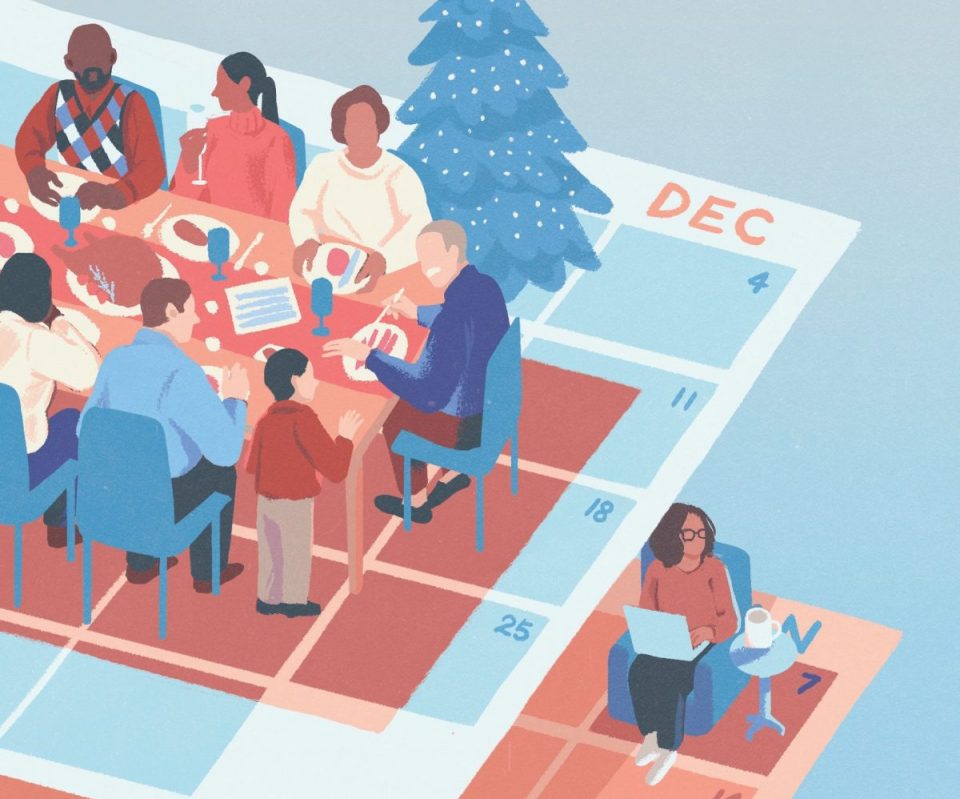
Debating Christmas Day: Copts, Calendars, and the Immigrants’ Church
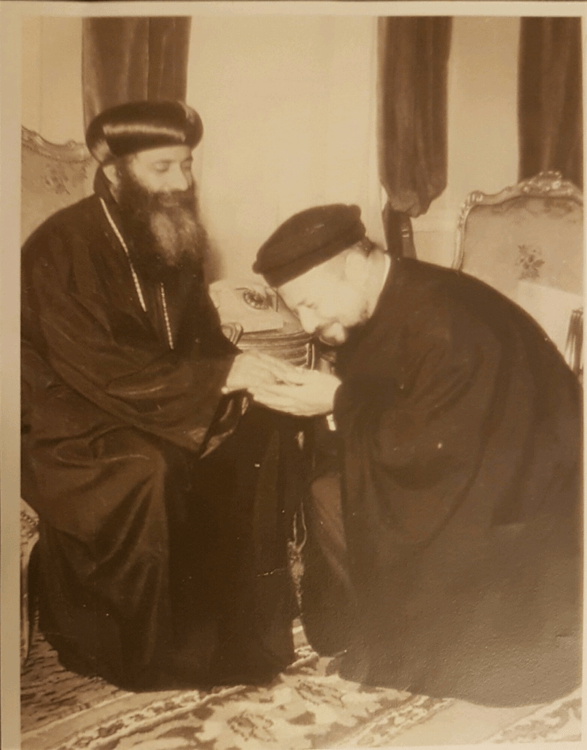
At the heart of such debates, past and present, is the tremendous influence of Pope Shenouda and the many meanings of belonging to the Coptic Orthodox Church of Egypt. In order to chart this history and offer insights on its contemporary significance, we begin with the challenges faced by early Copts in North America and then outline the changing nature of Coptic diasporic communities as a consequence of rising immigration from Upper Egypt, following the 2011 revolution.
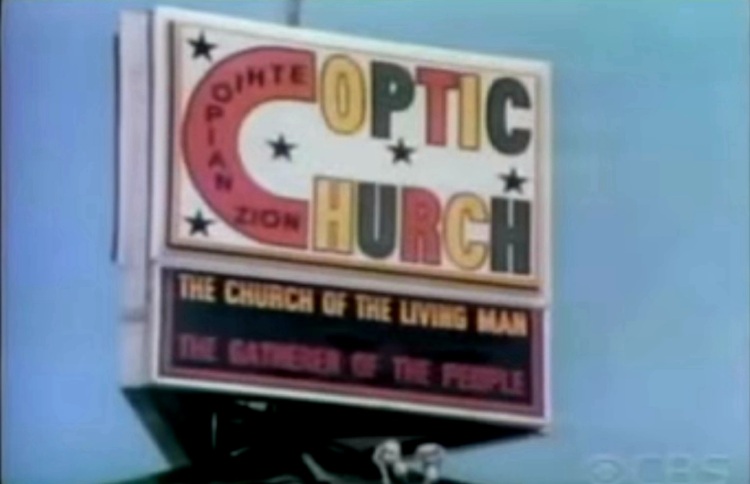
Holy Smoke: Egypt’s Copts Discover the Ethiopian Zion Coptic Church
While we may think that diaspora activism often revolves around homeland politics, sometimes it is also determined to disaffiliate from the ganja. As a new immigrant group, Copts worked to stake a claim to their distinct heritage as a model minority in North America.

How Santa-tised Western Christmas is displacing traditional Coptic Orthodox celebrations in Egypt
In recent years, Western Christmas celebrations have eclipsed the Orthodox indigenous Christmas celebrations from the public sphere because of the escalating Westernisation and hyper-capitalisation of Egyptian society. Evident throughout major cities across Egypt, this process is far more accelerated and vivid in affluent suburbs, such as Sheikh Zayed and the Fifth Settlement, distinguished by the socio-economic profiles of residents and entanglements in global markets.

Conversations with Egyptian Uber Drivers: Why Emigrate? Why Canada?
There are approximately 150,000 Uber drivers in Egypt, and it is the most convenient and comfortable form of travel for visitors. Stuck in mid-day traffic, Michael Akladios would engage the drivers in conversation. After nearly three dozen conversations, patterns emerged. The perception of emigration, its motivations, and the expectations of those wishing to emigrate have all changed in the past sixty years.

Arab-Canadian Foodscapes and Authenticity
Somehow, not knowing what Tabbouleh was made the very claim to “Egyptian-ness” questionable. This simple appetizer came to define what it meant to be Middle Eastern in the Western imagination. Meanwhile, Egyptian Kushari will never be found in a restaurant in the GTA. Eaten since at least the nineteenth century, this famous staple of Egyptian cuisine will only be found in family kitchens and mosque and church festivals.

Celebrating Ordinary: The CCHP and the Coptic Immigrant Experience
The CCHP (now Egypt Migrations) is the first-ever repository to prioritize the history and collective memory of ‘ordinary’ immigrants from Egypt. To speak of the ‘ordinary’ is to adopt the perspective of social historians who ask us to look past the “great men of history” and seek the experiences of migrants, refugees, minorities, women, children, and the societies in which they live and act.
Talks, Lectures & Podcasts
Michael Akladios joined Fr. Paul Guirgis in Mississauga for a conversation on Coptic life, discreet church-building, and the communal and societal pressures that informed emigration to North America, as well as what happened once Coptic immigrants in Canada and the United States began demanding priests and the building of churches to serve their social and spiritual needs. In dialogue, the connecting tissue between past and present comes together toward imagining Coptic futures in diaspora, as Canadian and American-born generations shape differing expressions of identity.
In June 2024, Michael Akladios participated in Coptic Solidarity’s 12th Annual Conference, The Coptic Problem, held in Washington, D.C. He joined a panel discussion in the historic Cannon Caucus Room moderated by Mariam Wahba (FDD) and spoke about the urgent need to preserve Coptic communal memory and identity beyond religious institutions, emphasizing that Coptic history must not be left to vanish. He challenged attendees to take personal responsibility for recording stories, safeguarding records, and investing in the humanities and critical thinking—because we all have a responsibility to act meaningfully for the sake of future generations.
Michael Akladios leads a community conversation on Religious Education and Devotional Revolution in Modern Egypt with parishioners at St. Maurice and St. Verena Coptic Orthodox Church in Markham, Ontario. He introduces a narrative of the Church that’s not widely known and attends to the perspectives of those clerical and lay figures who witnessed and participated in religious revival. Despite its ancient roots, the Coptic Orthodox Church we know today is a product of colonial encounter and a modern state project in Egypt. That change brought about a responsive effort toward educational development that inspired a devotional revolution modern Copts continue to benefit from and elaborate today across Egypt and its diasporas.
Part of a Webinar series hosted by Egypt Migrations and funded by the Orfalea Center for Global & International Studies at the University of California, Santa Barbara, the Oral History: Methods and Best Practices Workshop emphasizes reparative and non-extractive researcher relationships with Global South and local community repositories. Featuring panellists from Egypt, Canada, and the United States, this practical introduction to archiving, collecting local histories, and preservation is intended to guide participants in ethical and community-based approaches and best practices. Visit Egypt Migrations’ YouTube channel for recordings of the full series. This third webinar includes talks from Dr. Michael Akladios (University of Toronto), Leila Zonouzi (UC Santa Barbara), and Diogo Bercito (Georgetown University). Speakers, researchers, and community members discuss practical advice and tips for conducting oral history interviews for research and preservation.
At the invitation of Moska Rokay of the Muslims in Canada Archive (MiCA), Michael Akladios speaks on the growth of Egypt Migrations and its mission to create original resources through the collection of oral histories. No human story exists in isolation. Lived experience is full of interconnections with a diverse population of individuals, and with other communities beyond the ones we are part of. Through conversation between a community archivist and a community historian, Moska and Michael explore some of this interconnectedness while placing Egyptians within a broader network than what is seen in typical archival practices. The power of oral histories can be appreciated as a method of archiving, with an emphasis on the importance of sharing authority over the material and process with the subjects of inquiry.
For Episode 13 of Coffee with Bishop Suriel, His Grace interviews Dr. Candace Lukasik and Dr. Michael Akladios about Coptic immigration to North America. Copts began immigrating to the US as early as the late 1940s. After 1952, immigration to Canada outpaced the US until the inauguration of more lenient procedures in 1965. In general, Coptic immigration rose steadily throughout North America, Europe, and Australia in the coming decades. We see a further influx of Copts to the US and Canada after the 2011 revolution in Egypt, fleeing instability and violence. The episode traces this trajectory and the present challenges facing Copts globally
Michael Akladios presented “The Copts in Egypt’s Twentieth Century” at the invitation of the Orthodox Christian Students’ Association (OCSA) at York University in Toronto. For their 2019 Beyond Persecution Series, Michael spoke about the history of Coptic populations and the challenges many continue to face in Egypt. This was part of a joint event hosted by Armenian, Chaldean, and Coptic students to commemorate and shed light on their distinct histories and common Christian heritage. Speakers were invited to showcase both Christian belonging in the Middle East and the impact of persistent persecution on new diasporic communities that seek to preserve cultural uniqueness in new lands
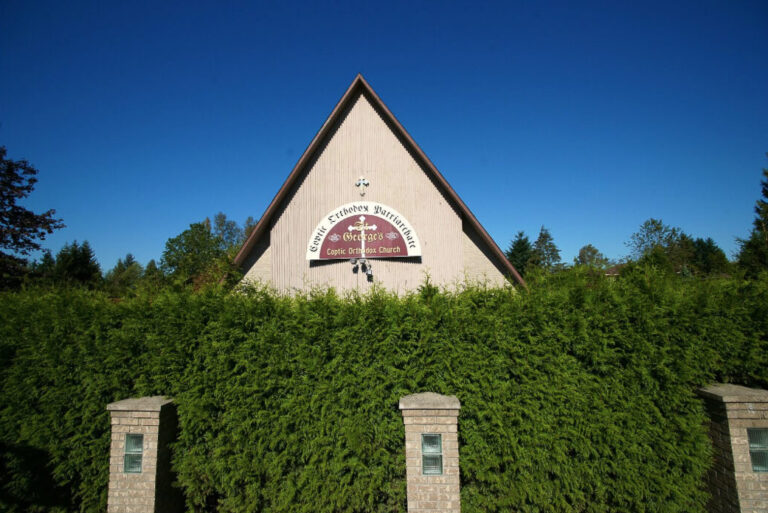
“Coptic Places of Worship in Toronto” was presented at the Myseum Intersections Festival in 2018 as part of a two-week collaborative exhibition with the Coptic Museum of Canada. Michael Akladios represented Egypt Migrations in celebration of the history and heritage of Canada’s Copts. This public talk explores interactions and exchanges between devotional persons in religious settings and follows the movements of the earliest Coptic immigrants from Egypt as they navigated Toronto in the 1960s and 1970s.
Media Mentions & Expert Commentary