My research on migration and ethnicity in North America and the Egyptian diaspora examines the relationships between individuals, communities, and institutions across borders. I am especially interested in immigrants and their descendants, and in how ordinary people negotiate settlement, integration, and belonging within changing political and social environments. Caught between the ambitions of governments and the dominant groups of their home and host societies, their everyday choices are shaped and often constrained by migration and settlement policies, debates over cultural pluralism, access to education and labour markets, and the community institutions that sustain mobility and settlement trajectories over time. These questions have led me from the study of Coptic Orthodox Christians to broader work on Arab diasporic nationalism, community memory, minority–majority relations, generational change, and the uneven social and economic adaptation of newcomers to Canada and the United States.
Methodologically, my work is grounded in oral and public history, sustained community-engaged fieldwork, and extensive archival research in Canada, the United States, and Egypt. Drawing on scholarship across the humanities and social sciences, I connect individual and community experiences to the larger institutional, political, and geopolitical forces that shape everyday life. Over time, this has raised new questions about citizenship and integration, long-distance nationalism, as well as trade, conflict, foreign relations, and the distinctive role migrants have played in twentieth- and twenty-first-century developments linking North America and the global Middle East.
Books
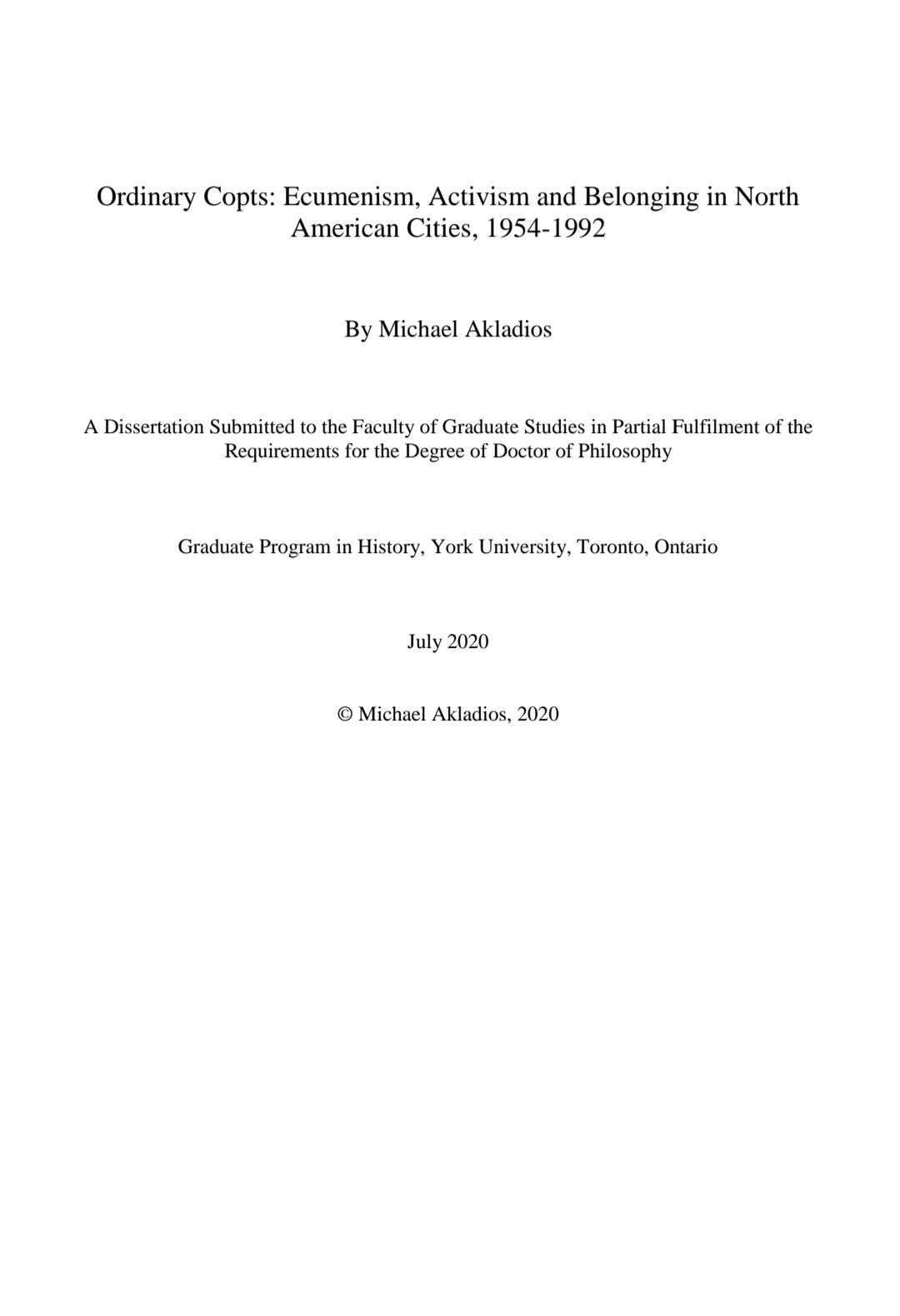
Ordinary Copts: Ecumenism, Activism, and Belonging in North American Cities
McGill-Queen’s University Press, forthcoming
Drawing on fifty oral histories alongside Canadian, American, Egyptian, ecclesiastical, and immigrant archival collections, Ordinary Copts traces Coptic migration from Egypt to Canada and the United States after the 1952 Free Officers Revolution. The book follows migrants through settlement, acculturation, and institutional development in North American cities, showing how Copts pursued integration while preserving a distinctive ethnoreligious identity and sustained ties to Egypt. In doing so, it places everyday immigrant experience within broader histories of multiculturalism, minority belonging, political activism, and Cold War relations between North America and the Middle East.
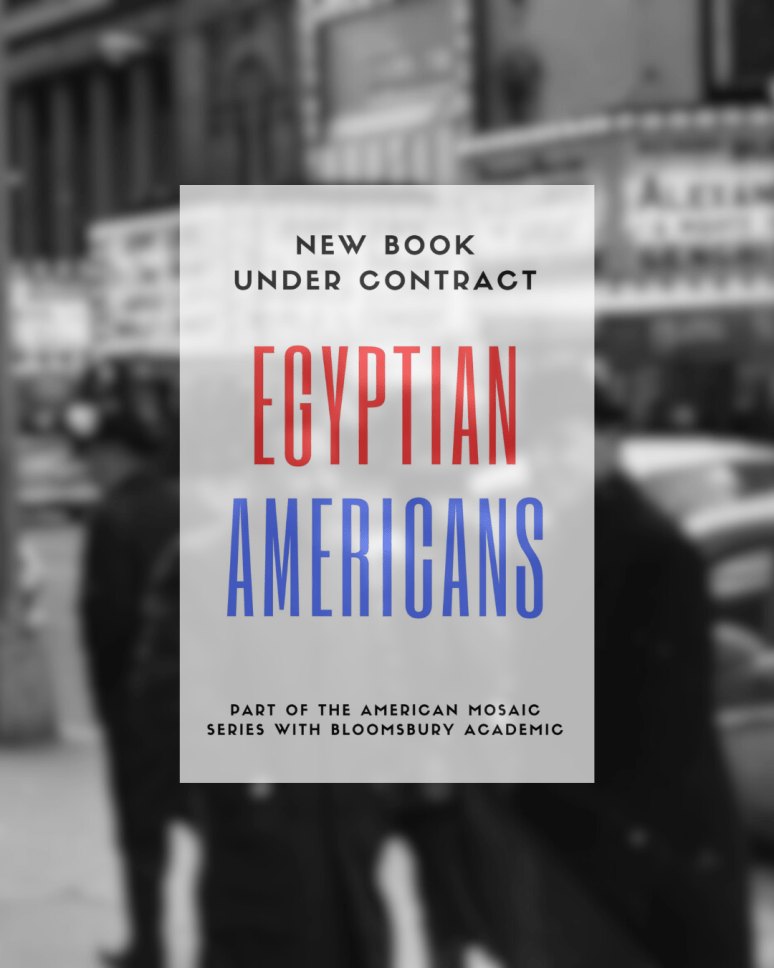
Egyptian Americans: History, Culture, and Experiences
Bloomsbury Academic, forthcoming
The first comprehensive reference text dedicated to the history, culture, and evolving identities of Egyptian Americans, this book brings together archival research, census data, personal narratives, and the latest scholarly literature to document how individuals and families from Egypt have navigated life in the United States across generations. Egyptian Americans examines how Egyptians adapted socially and economically, built institutions, negotiated racial and religious identities, and maintained transnational ties to Egypt. Designed for students, educators, researchers, and general readers, it offers an accessible yet critically engaged account of a community whose contributions remain largely overlooked in public discourse.
Edited Collections & Chapters

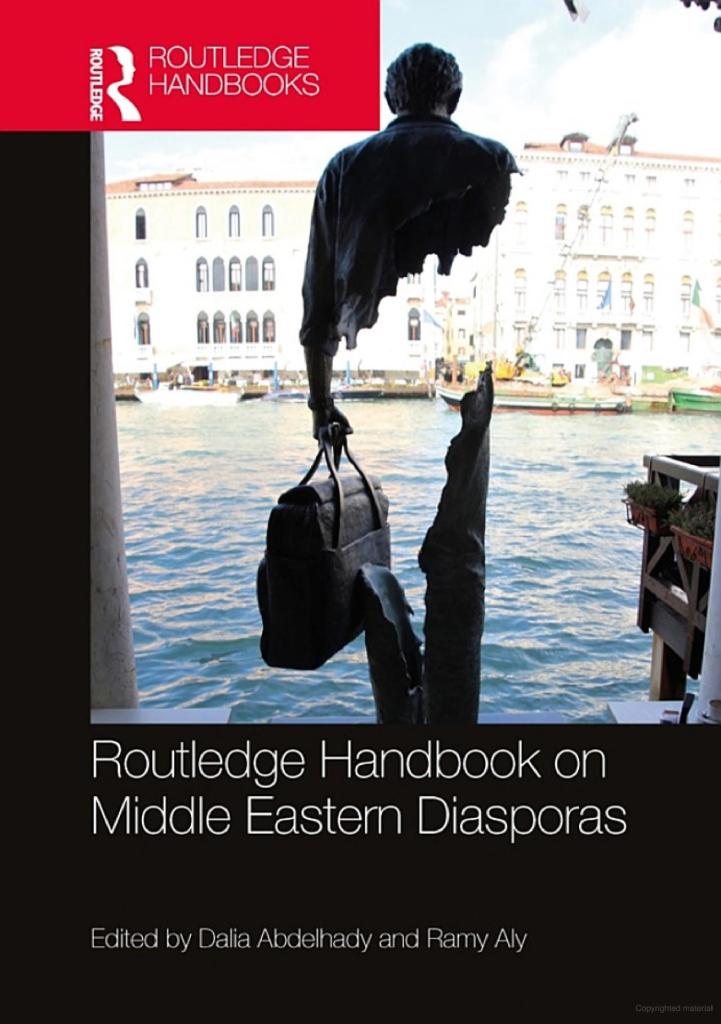
Toward Critical Coptic Studies brings together scholars in the field to challenge inherited assumptions in Coptic Studies and advance more critical, interdisciplinary approaches to Coptic history, identity, migration, and community life.
Peer-Reviewed Articles

Open Access & Collaborative Scholarship

“Coptic Orthodox Christians,” World Religions and Spirituality Project, last modified August 1, 2025. A living scholarly reference profile on the history, beliefs, institutions, and global development of the Coptic Orthodox community.

“Doing History in the Age of AI,” Canadian Historical Association / Société historique du Canada (2026). Drawing on experiential teaching at Mount Allison University, the article argues that we should respond to AI by centring sustained inquiry, collaborative learning, and the practice of doing history in course design.

Co-authored with Amy Fallas, “Research under Covid Lockdowns, or How I Learned to Stop Worrying and Love Online Resources,” Egypt Migrations and the Orfalea Center for Global & International Studies UCSB (2021). The essay reflects on archival research during the pandemic and argues for a more equitable, reflexive, and solidarity-based approach to research access and practice.
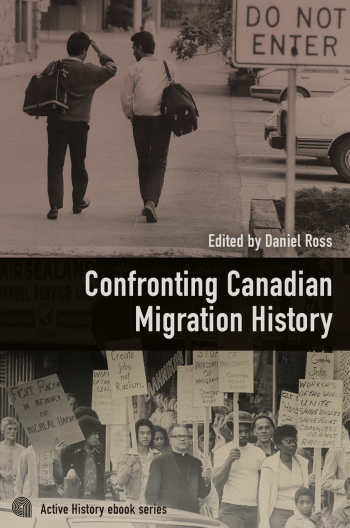
Contributor, Confronting Canadian Migration History (2019). An open-access collection of fifteen essays originally published on ActiveHistory.ca, highlighting engaged and public-facing scholarship in Canadian migration history.

Contributor, The Canadian Immigration History Syllabus (2019). An open-access teaching resource that brings together key themes, readings, primary sources, and questions in the history of migration to, from, and within Canada, providing educators and students with historical context for contemporary debates.
Reports & Reviews